How it works
Pick a version
Choose a saved version to test against the live site.
Split your visitors
Half see each by default, and you can set anything from 5 to 95 percent.
Keep the winner
Compare the results and keep the version that converts better.
How a test runs
Pick any saved version in the studio and choose Test against live. Briks then serves both: the version that was live before the test, and the one you picked. Each visitor is placed in one of them and kept there with a cookie, so they keep seeing the same version.
The split is yours to set, from 5 to 95 percent; half and half is the default. A small share suits a bold change, when you want to limit the risk while you learn.
While the test runs, versions are locked, so nothing else changes under it. When you have your answer, end the test by keeping one version, and that version stays live.
What counts as a conversion
A test is only as good as what it counts. Briks counts the actions that matter to a small business: a tap on a phone number or an email address, a form sent, and a click on the site's main action. Each visitor counts once, with at most one conversion, so one keen visitor tapping your number five times does not tip the result.
For each version, the studio shows how many visitors converted out of how many saw it, the conversion rate, the change in conversion between the two, and the chance that the new version truly converts better.
Read that chance with patience. Until each version has about 100 visitors, the studio says it is still collecting visitors. When the chance passes 95 percent either way, it says which version is very likely better. Between those, it says there is no clear winner yet.
Good tests for small sites
Test one idea at a time: a headline, the order of sections, the words on the main button. If the new version changes five things and wins, you will not know which of the five mattered.
Small sites see fewer visitors, so give a test time. A site with a few hundred visitors a week may need several weeks for a clear answer, and some tests never reach one. That is an answer too: the change made little difference, so keep whichever you prefer.
Because the test keeps each visitor in their version with a cookie, your site's cookie notice should cover it. The analytics themselves count without cookies.
A test compared with a guess
Without a test, a change and its result arrive mixed up with everything else that happened that month: the season, a post that did well, a competitor's sale. A test shows both versions to visitors in the same weeks, so the difference between them comes down to the change.
It also protects you from a bad idea. Show a risky change to a small share of visitors first, and if it does worse, end the test by keeping the version that was live.
A/B testing in practice
Three example businesses, and how each would use it. Where a site is pictured, it is a sample Briks built for an example business, not a customer.
- 01Bakery
Two words on the main button
A bakery tests its main button: Order for Saturday against See this week's bread. Clicks on the main action count as conversions, along with calls and emails. If the new words reach a 95 percent chance of converting better, the studio says so, and the owner keeps that version.
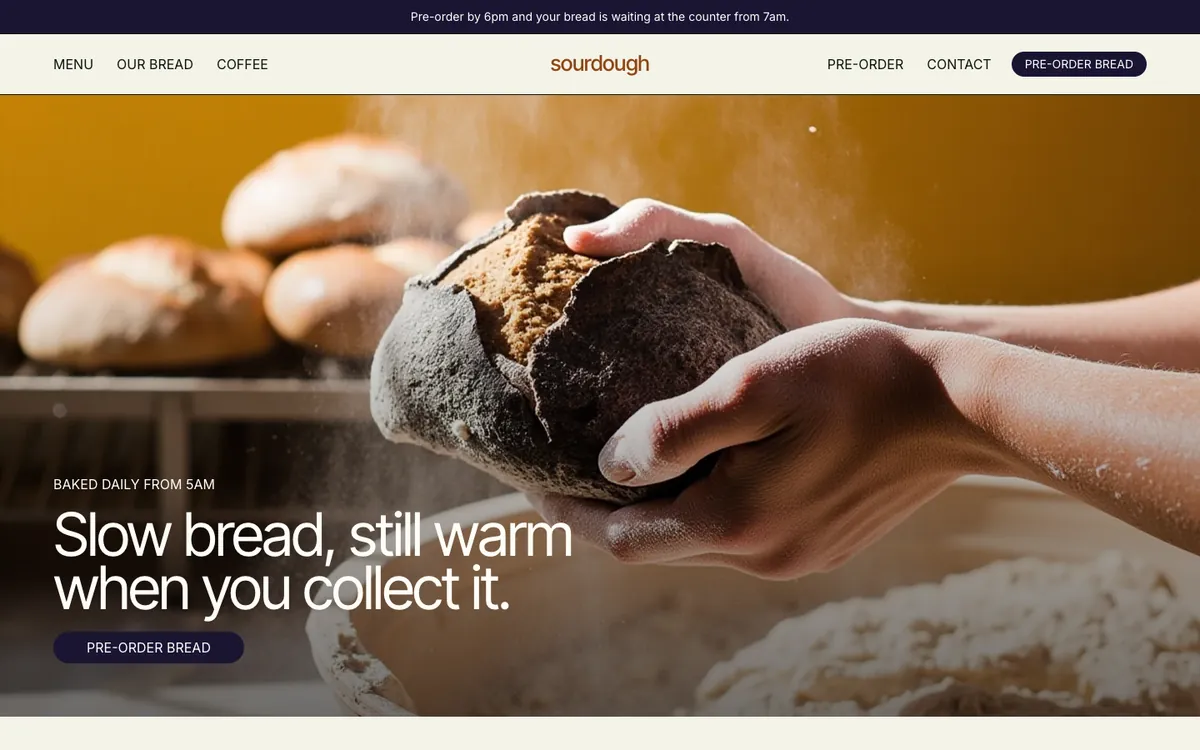
Sourdough is a sample site Briks built for an example bakery and coffee shop, not a customer. Open the sample - 02Building contractor
A quote form higher up the page
A building contractor moves the quote form from the bottom of the home page to just under the opening. Because the change is large, he shows it to 20 percent of visitors first. Forms sent and phone taps count as conversions.
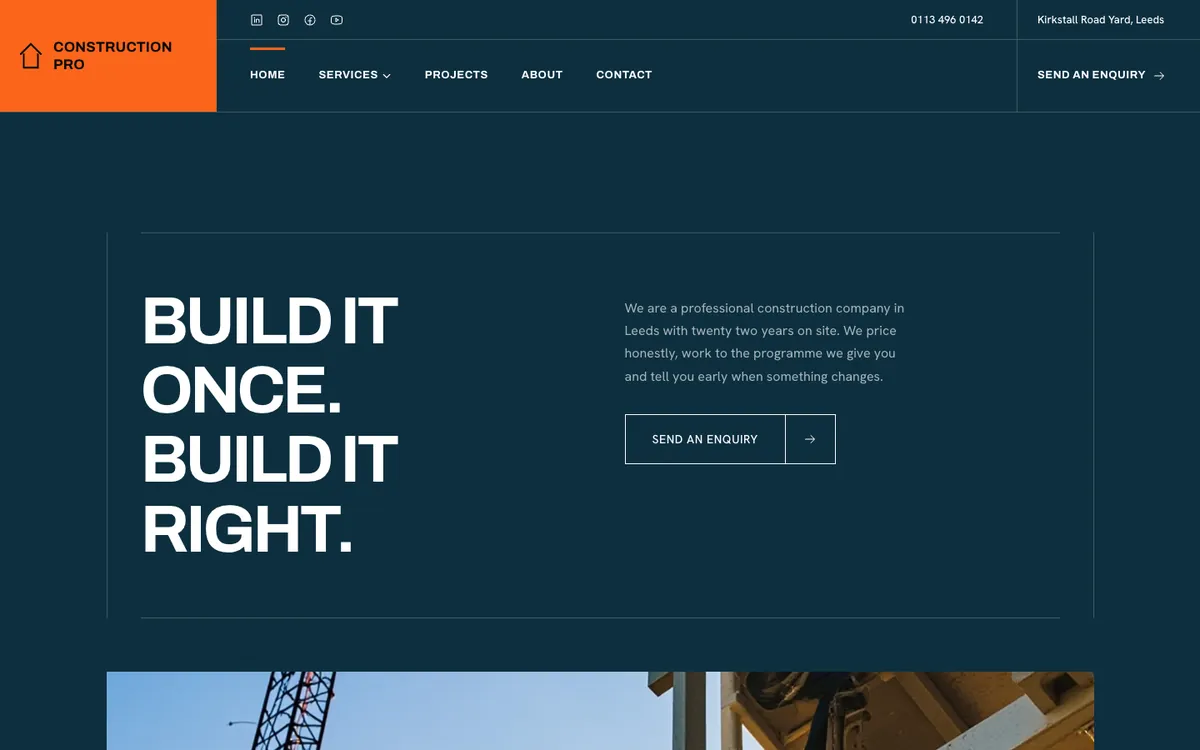
Construction Pro is a sample site Briks built for an example building contractor, not a customer. Open the sample - 03Psychology practice
When there is no winner
A practice tests a warmer headline. After a month the studio still says there is no clear winner. The practice keeps the version it likes and tries a bigger change next: a shorter enquiry form.
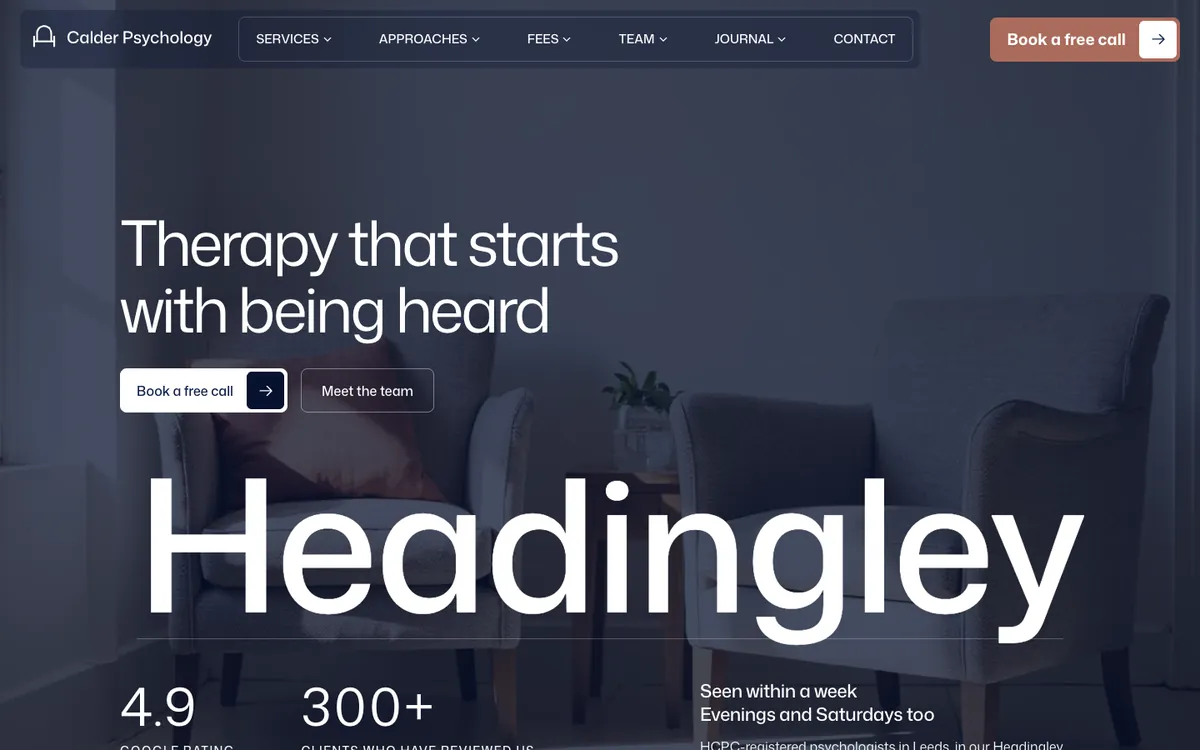
Calder Psychology is a sample site Briks built for an example psychology practice, not a customer. Open the sample
What you get
- A saved version against the live one
- Split from 5 to 95 percent, half and half by default
- A conversion is a call or email tapped, a form sent, or the main button clicked
- One visit and at most one conversion counted per visitor
- A verdict only once each version has about 100 visitors
Good to know
- Tests keep each visitor in their version with a cookie.
- Versions are locked while a test runs.